


Journal · · 3 min read
Marble in the Gulf climate: how inlaid stone lasts, and how to care for it
Heat, humidity, sun and sand: practical guidance for marble and pietra dura in homes across the UAE.
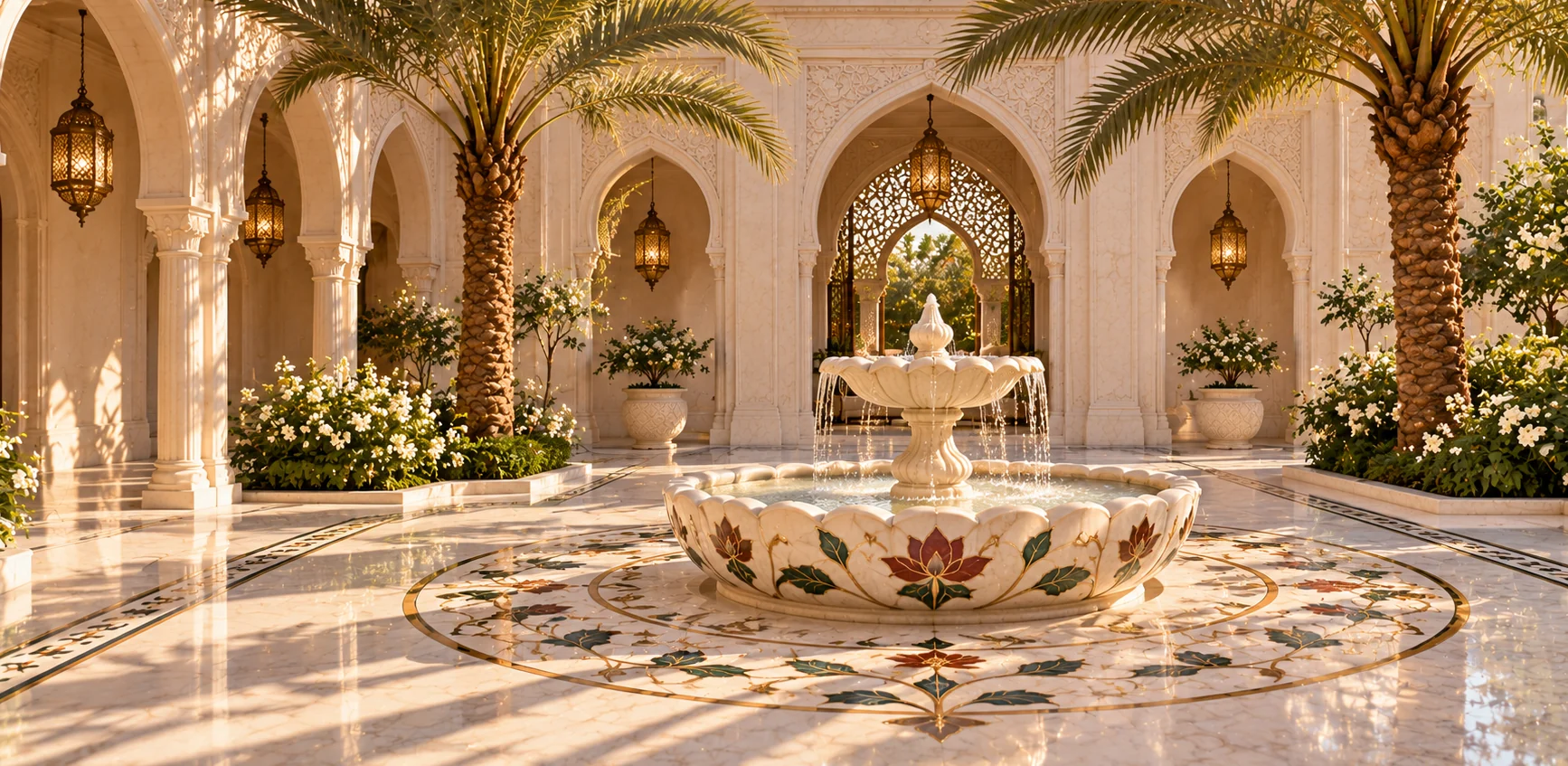
Marble has been used in hot countries for thousands of years, and well-made inlaid stone is remarkably durable. A few simple habits keep it at its best in the conditions of the Gulf.
Heat and sun
Natural stone is stable in heat, and marble stays cool to the touch in a way few materials do. Outdoors, a honed finish is often better than a high polish: it is less slippery and shows less wear. Some coloured stones and resins can fade in strong, direct sun over many years, so for outdoor pieces we choose stones and settings suited to exposure.
Humidity and water
Marble is slightly porous. A good penetrating sealer, renewed periodically, helps it resist staining from water, oils and spills. For fountains and baths we finish and seal the stone for constant contact with water.
Sand and dust
Fine sand is abrasive. Dust marble surfaces with a soft dry cloth or a damp microfibre cloth rather than wiping grit across the polish. Mats at entrances protect inlaid floors.
What to avoid
Marble is calcite, and acids etch it. Lemon, vinegar, some fruit juices and many common cleaning products leave dull marks on a polished surface. Use coasters, wipe spills promptly, and clean only with a pH-neutral stone cleaner. Avoid abrasive pads.
Caring for pietra dura
An inlaid surface is ground and polished as one plane, so it is cared for just like plain marble. If the polish ever dulls, it can be restored by a skilled polisher; the inlay goes through the full depth of each piece, so it does not wear away.
Built for generations
The inlaid flowers on the Taj Mahal have survived nearly four centuries of sun, monsoon and dust. With a little care, a piece made today will be handed down.