


Journal · · 3 min read
Makrana marble: why the stone of the Taj Mahal is still the finest white marble
A Heritage Stone recognised by the International Union of Geological Sciences, quarried in Rajasthan for more than four centuries.
When Shah Jahan built the Taj Mahal, the white marble came from Makrana, a town in the Nagaur district of Rajasthan. Four centuries later, the same quarries are still worked, and the stone is still prized above almost every other white marble in the world.
A Heritage Stone
In 2019 the International Union of Geological Sciences designated Makrana marble a Heritage Stone, a recognition given to natural stones that have been used in significant architecture over a long period and remain part of a living cultural tradition. Few stones in the world carry the designation.
What makes it different
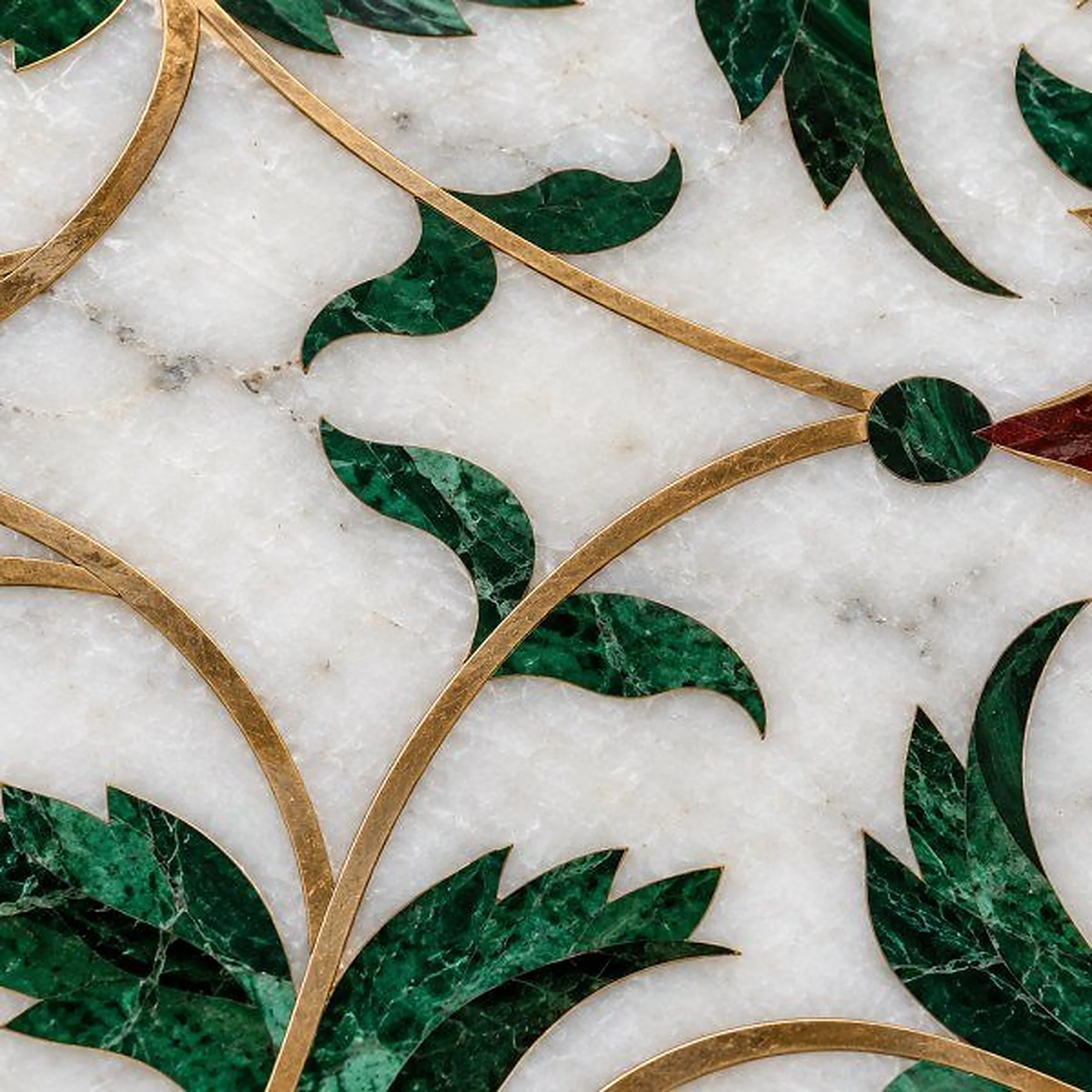
Makrana marble is exceptionally pure, made almost entirely of calcite, with a fine, even crystal. That purity gives it its particular quality of light: the surface seems to glow rather than simply reflect, warm in the morning, cool and luminous at night. It takes a high polish and holds it, and its density makes it well suited to the fine cutting that inlay demands.
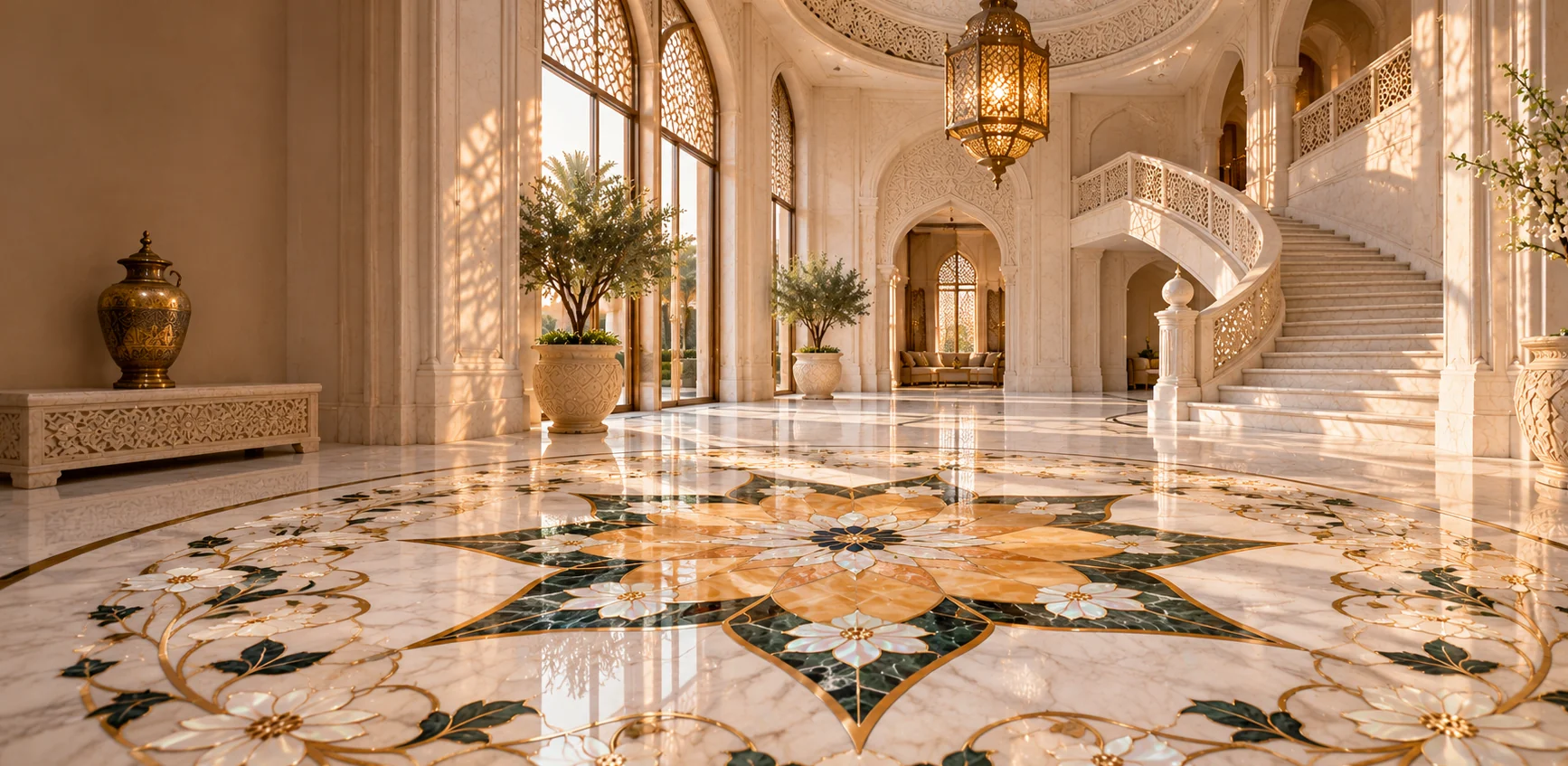
The stone ranges from pure white to white with soft grey veining, and every block is different. For pietra dura, that consistency matters: a clean, bright ground lets the colours of lapis, malachite and carnelian read at their truest.
Buildings in Makrana marble
Beyond the Taj Mahal, Makrana marble has been used in the Victoria Memorial in Kolkata and, in recent years, in the Sheikh Zayed Grand Mosque in Abu Dhabi. It is a stone that has been chosen, again and again, for buildings intended to last.
Choosing a block
Not every block of Makrana marble is equal. For a bath carved from a single block, or a table top meant to carry a thousand inlaid pieces, the block must be sound throughout, free of hidden faults, and of an even tone. Our family has worked these quarries for six generations; we select each block at the quarry face, and for the largest pieces we send photographs of the actual block for your approval before anything is cut.
Caring for it
Like all marble, Makrana is calcite, and acids etch it. Lemon, vinegar and some cleaning products will dull the polish. Wipe spills promptly, use a pH-neutral cleaner, and the stone will keep its glow for generations, as the Taj Mahal shows.