


Journal · · 3 min read
What is pietra dura? The craft of the Taj Mahal, explained
Stone set into stone so closely that the joint all but disappears. A guide to the art that Florence perfected and the Mughals made their own.
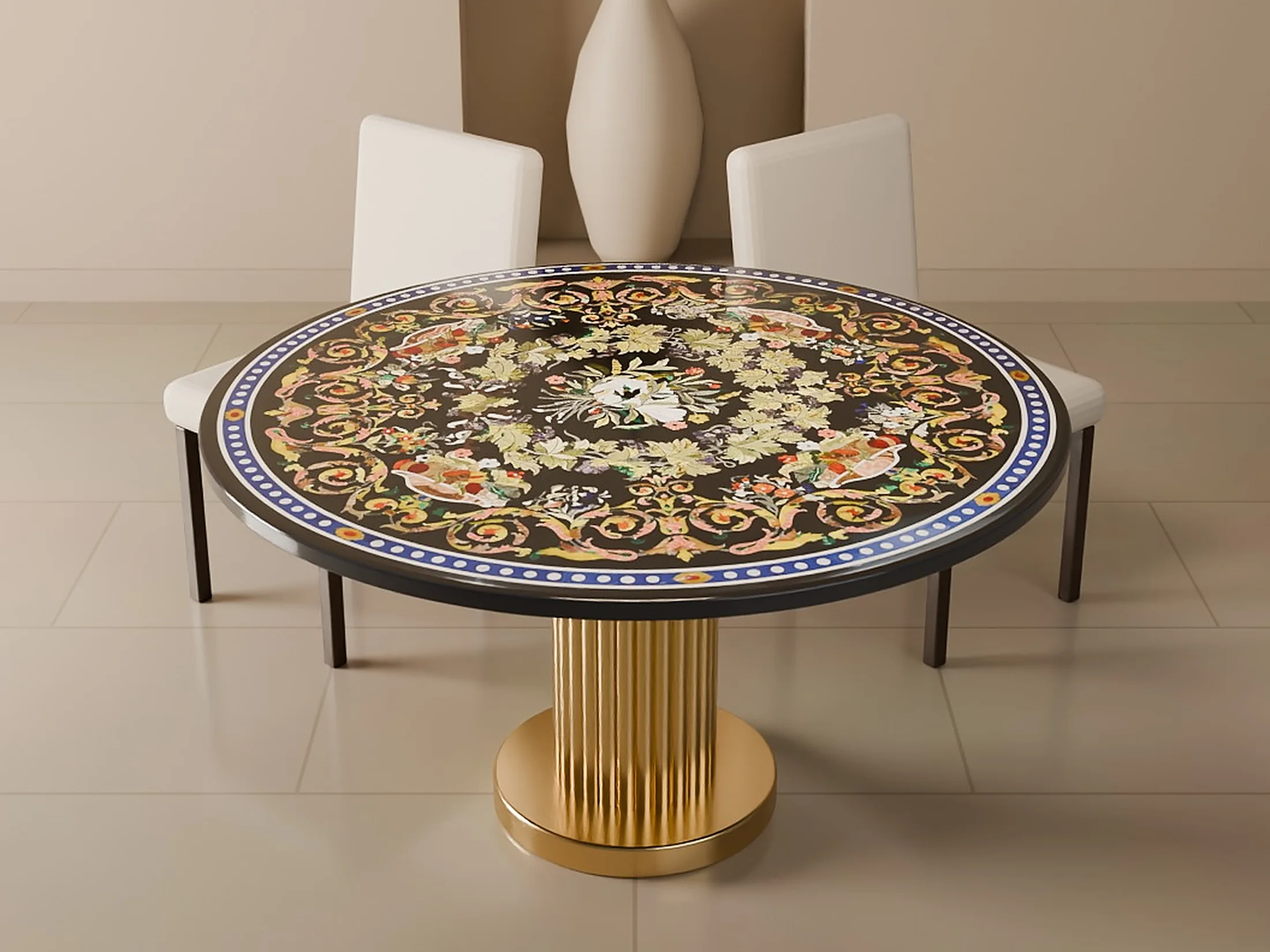
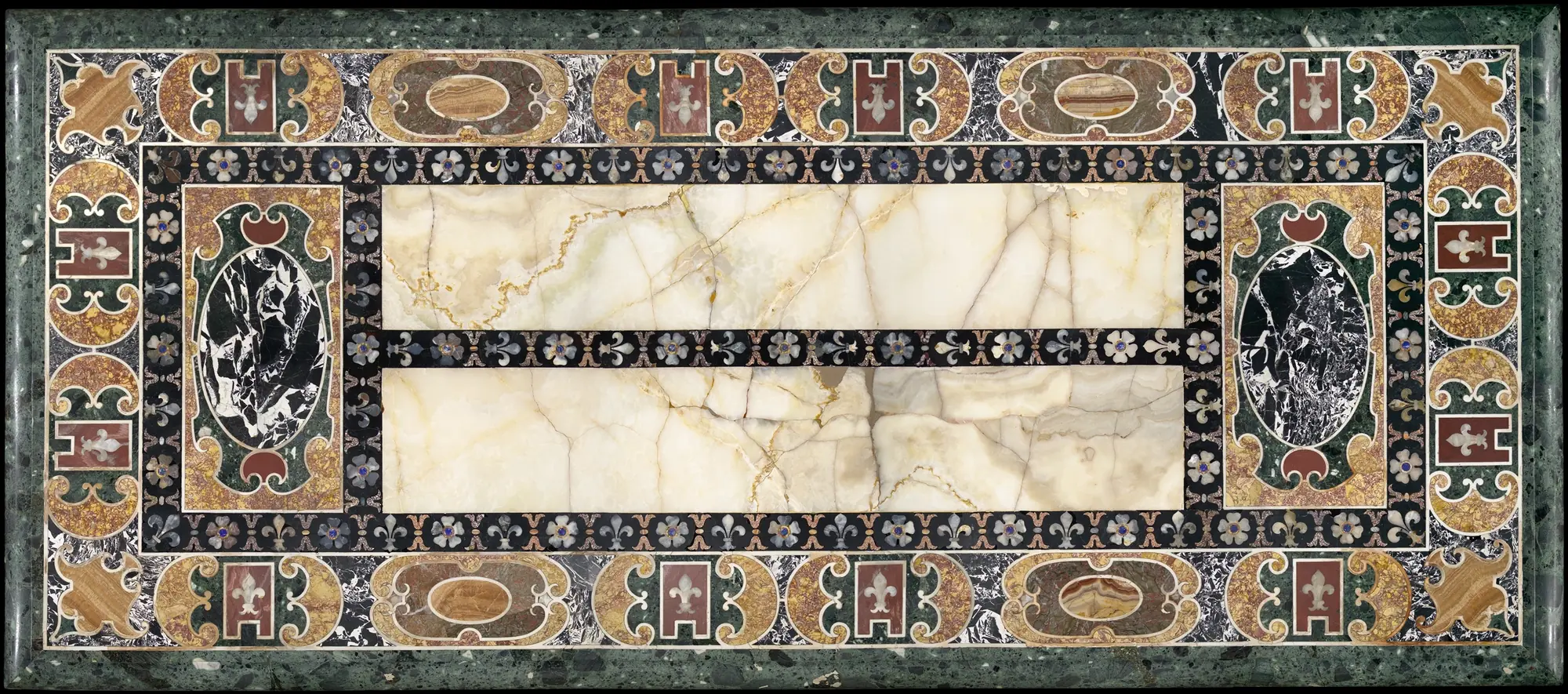
Pietra dura, Italian for “hard stone”, is the art of cutting semi-precious stones into shapes and setting them into a ground of marble so precisely that the joints all but disappear. Lapis lazuli becomes the blue of a petal, malachite the green of a leaf, carnelian the red at the heart of a flower. Nothing is painted. Every colour you see is the natural colour of a stone.
Florence, then Agra
The craft reached its first great height in sixteenth-century Florence, where the Medici founded a court workshop, the Opificio delle Pietre Dure, in 1588 to make tables, cabinets and panels of inlaid stone for the palaces of Europe. Within a few decades the art had travelled east. In the Mughal courts of India it met a living tradition of stone carving and flowered into something new: softer, more botanical, more luminous.
In India the craft is called parchin kari, from the Persian for “inlaid work”. Its supreme expression is the Taj Mahal, completed in the mid-seventeenth century, where flowers of carnelian, lapis lazuli, jade and other stones are set into the white marble of Makrana across the tomb and its cenotaphs. More than three and a half centuries later, those flowers remain as crisp as the day they were set.
How it differs from mosaic and marquetry
A mosaic is built from many small, regular pieces, and the eye reads the grout between them. Pietra dura works the other way. Each piece is cut to the exact outline of the shape it represents, a whole petal or a whole leaf, and fitted so tightly to its neighbours that, once polished, the surface reads as one continuous stone. Marquetry does something similar in wood veneer; pietra dura does it in stone that is several millimetres thick and will last for centuries.
The four stages
The drawing. The design is drawn at full size and divided into numbered fields, one for every piece of colour. A single dining table can carry more than a thousand.
The cutting. Each stone is chosen for its colour and figure, traced, and shaped by hand against a wheel, a fraction of a millimetre at a time, until it meets the line exactly.
The setting. The marble ground is carved away to receive each piece, and the stones are set as tight as a hair, fixed with a traditional adhesive.
The polish. The whole surface is ground flat and polished until picture and marble become one plane, smooth under the hand.
Why it is so rare
Pietra dura cannot be hurried. A coffee table of a few hundred pieces takes weeks; a grand dining table of fifteen hundred pieces takes several months at the bench. The skill passes from master to apprentice over years, and in India it remains concentrated in a few families who have practised it for generations.
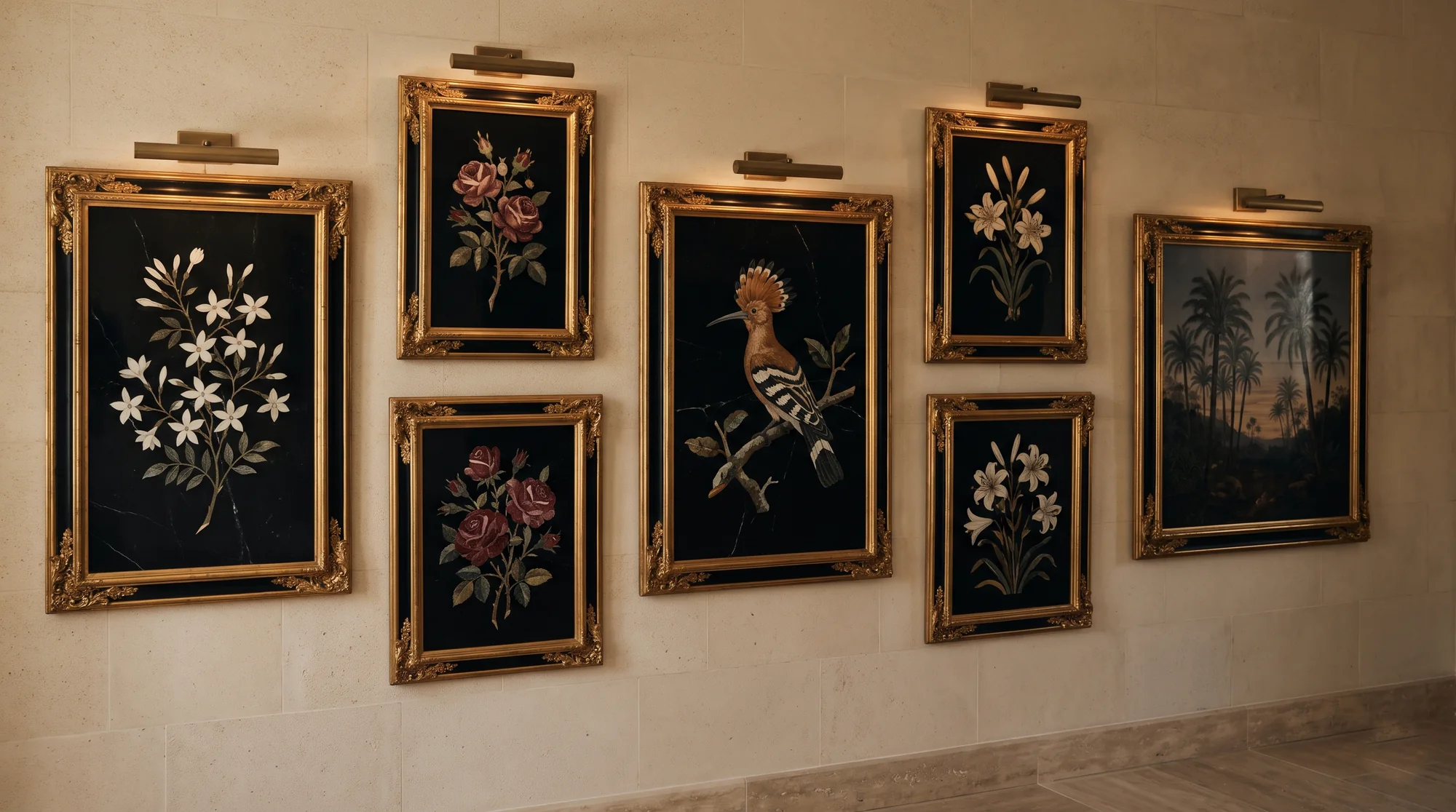
House of Samina belongs to one of those families. Every piece we make, a table, a bath, a wall, is drawn once, cut by hand, and made for one place.